
- Continuing work for long-term sustainability
- How we report Svenska Spel’s responsibility and sustainability
- Comments from the CEO and the CSR manager
- This is long-term sustainable development for Svenska Spel
- Stakeholders' expectations on Svenska Spel
- Social responsibility
- Responsibility for employees
- Economic responsibility
- Environmental responsibility
- Comments on the CSR Report
- Svenska Spel’s GRI profile
- Signatures of the Board of Directors
- Auditor's Combined Assurance Report
–Svenska Spel could provide more information
The National Institute of Public Health receives an annual grant of SEK 28 million for developing programmes to reduce the negative effects of gaming. Marie Risbeck, acting head of the Drug Prevention and Gaming department, is responsible for coordinating efforts that include dialogues with licensed gaming companies in Sweden.
How big a problem is gaming?
“It’s generally said that 2% of the population have gambling problems, while 98% are happy players. But that is not the whole truth. Firstly, the entire population does not gamble. Secondly, an additional 5% show a risk of developing a gaming problem and are already aware of some negative consequences of their gaming. We’ve also noted in our regular surveys that there is a redistribution within these 2%, even if the overall percentage level remains the same. Some overcome their problems, while others develop problems. However, once you’ve had a problem, there is a major risk of recurrence.”
How do you think that Svenska Spel handles its responsibility?
“Svenska Spel works admirably in this area. They are very conscious
and have integrated the social responsibility. They are also pioneers in programmes involving age limits, guidelines and other measures. But they could improve their information on the relation between a certain share of their customers that provide a certain share of their sales. This is crucial information. They could also improve their information to their customers, for example clarify what it actually costs when you press a button on a gaming machine.”
What risks do you see in the future?
“Increasing gaming problems among young men. Currently almost 10% of men between 18 and 24 have a problem with gaming for money. Since the access has increased, and fast games with a short intervall between staking and winning are in demand, I see a risk of more problem gaming. As a result, one must be very careful when developing new games. Also, one must work more effectively with targeted efforts aimed at young people, such as setting up gaming-free zones in places frequented by youths, such as schools and sport arenas.”
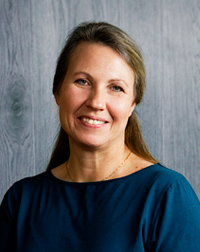
Marie Risbeck, Acting head of the Drug Prevention and Gaming department, The National Institute of Public Health